Building a Modern Wine Brand: Viv Thomson and the Making of Best’s Great Western
Part Three of our 160th Anniversary Series
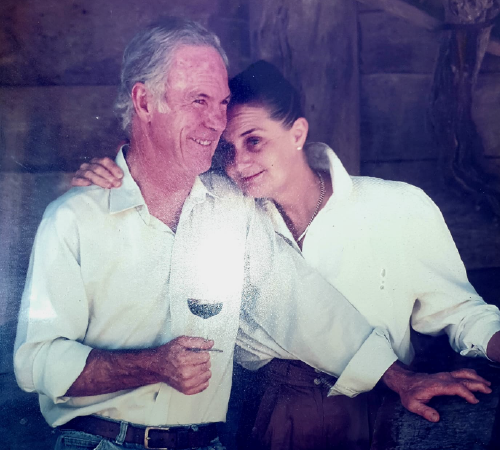
Every family business has a turning point, a single moment where the story could easily have gone another way. For Best’s Great Western, that moment was a blind date. Viv Thomson had little interest in winemaking, a taste for adventure had already set in after he completed his studies at Roseworthy Agricultural College. Instead, he stayed in Great Western with the love of his life and spent the next half-century helping build Best’s into the estate it is today.
Eric Vivian Hamill Thomson, known to everyone as Viv, was born in 1938 and started school at Lake Boga aged just four.
“The school was only 200 yards from the winery and I used to go down there and hang over the fence at playtime with the kids. One day the teacher said to his Mother when he was hanging around, ‘Oh, look, he may as well come to school.'”
Two years later the family moved to Concongella in Great Western, and Viv later boarded at Wesley College in Melbourne, a choice he suspects “may be related to my great-grandfather being a temperance caterer.”
Growing up between Lake Boga and Concongella gave Viv an early education in winemaking, but it was not one he was in a hurry to take up. After finishing school, he had little interest in the family business, heading instead to Roseworthy Agricultural College, north of Adelaide, to study agriculture. There he met fellow students whose families had settled in Kenya, and caught the travel bug. He spent close to a year there, picking up the language along with a few jobs and adventures of his own, before spending further time in Europe.
When Viv returned to Great Western in 1961, he still had no real intention of joining his father in the family winery. Then came the blind date. Viv was set up with Miss Christine Mary Huf, and it was, by all accounts, a match made in heaven. Rather than heading off to farm sheep, Viv decided to find himself a decent job. He and Chris were married at St John’s Church of England on 12 January 1963. Chris had grown up in Horsham, also from a farming family, and was no stranger to hard work or life inside a family business.
The young couple’s family grew quickly. Their first child, Ben, arrived in 1964, followed by Hamish in 1966, Yvette in 1968 and Marcus in 1970. In 1972 they moved into the Best’s homestead at the back of the winery, where Viv and Chris have lived and raised their family ever since.
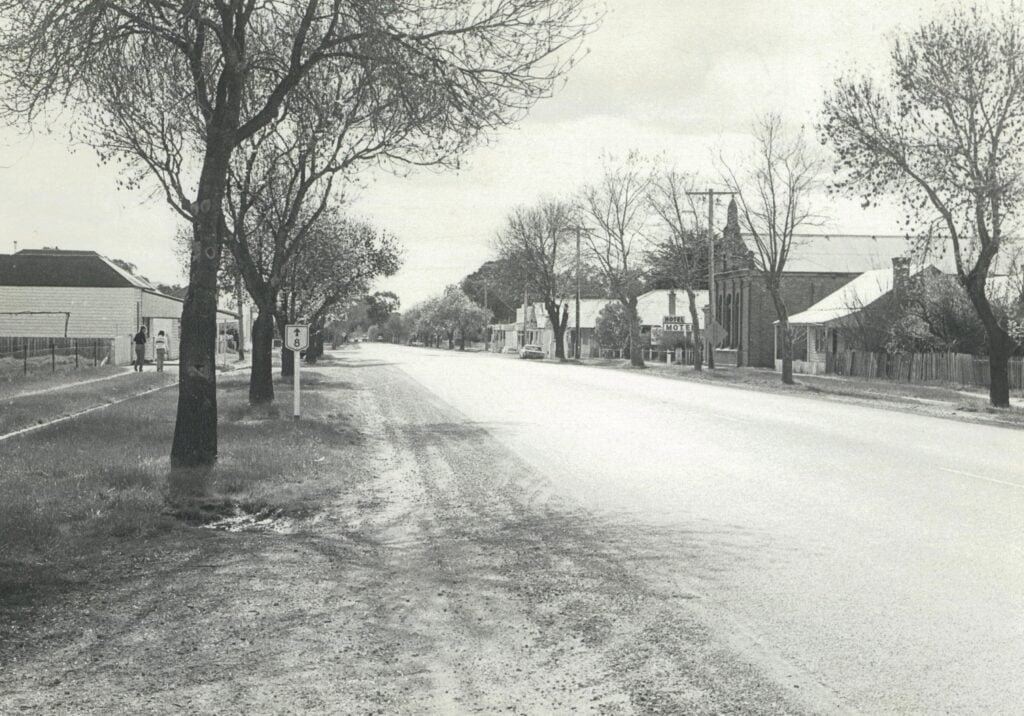
A Pioneering Cellar Door Experience
It wasn’t long before Viv and Chris turned their attention from raising a young family to reshaping how visitors experienced Best’s altogether. Together they had grand ideas for the future, anchored by hard work.
1974 saw the evolution of cellar door sales in the region with the relocation of Henry Best’s original stables to form the Best’s Stables Cellar Door. Viv recalls a family friend, Derek Jolly, visiting and spending time with Chris and the family. It was Chris and Derek who suggested relocating the old horse stables to the front of the property. It was a contentious plan. Money was tight, and Viv’s father Eric, having lived through the Great Depression, was never one to spend a penny lightly. Derek had a friend in Adelaide, John Dalwitz, who worked in the restoration business, and he knew carpenters living at Barma along the Murray who worked with redgum. It took considerable debate between Viv, his father Eric and Uncle Bill before they came around to Chris and Derek’s idea, but the relocation eventually went ahead with precision planning.
Considered an extension of the winery, the stables were full of charm and character. They fitted the cellar door brief perfectly, providing more space close to the winery and the historic underground cellars dug by hand in the 1870s.
The old stables had been part of the site for over 100 years, dating back to the 1870s. Moving them required careful planning. No nails had been used in the original building, and the roof was screwed rather than nailed in place. The beams, local timber and other materials had all been locally sourced, reflecting a past that was worth preserving.
Each plank was numbered and taken apart piece by piece. The timber was cut upright with slight nodes, one notch fitting into another so the pieces could slide together. All was moving along nicely. However, no one had factored in the young Thomson children living on the property, and did they put a spanner in the works. Ben and Hamish recalled thinking it would be funny to rub off some of the chalk markings and change things around. The consequences are well remembered to this day, with some beams never quite fitting together as originally intended.
The Cellar Door became just what it was meant to be: a memorable place for the Thomson family to share the stories behind the Best’s wines.
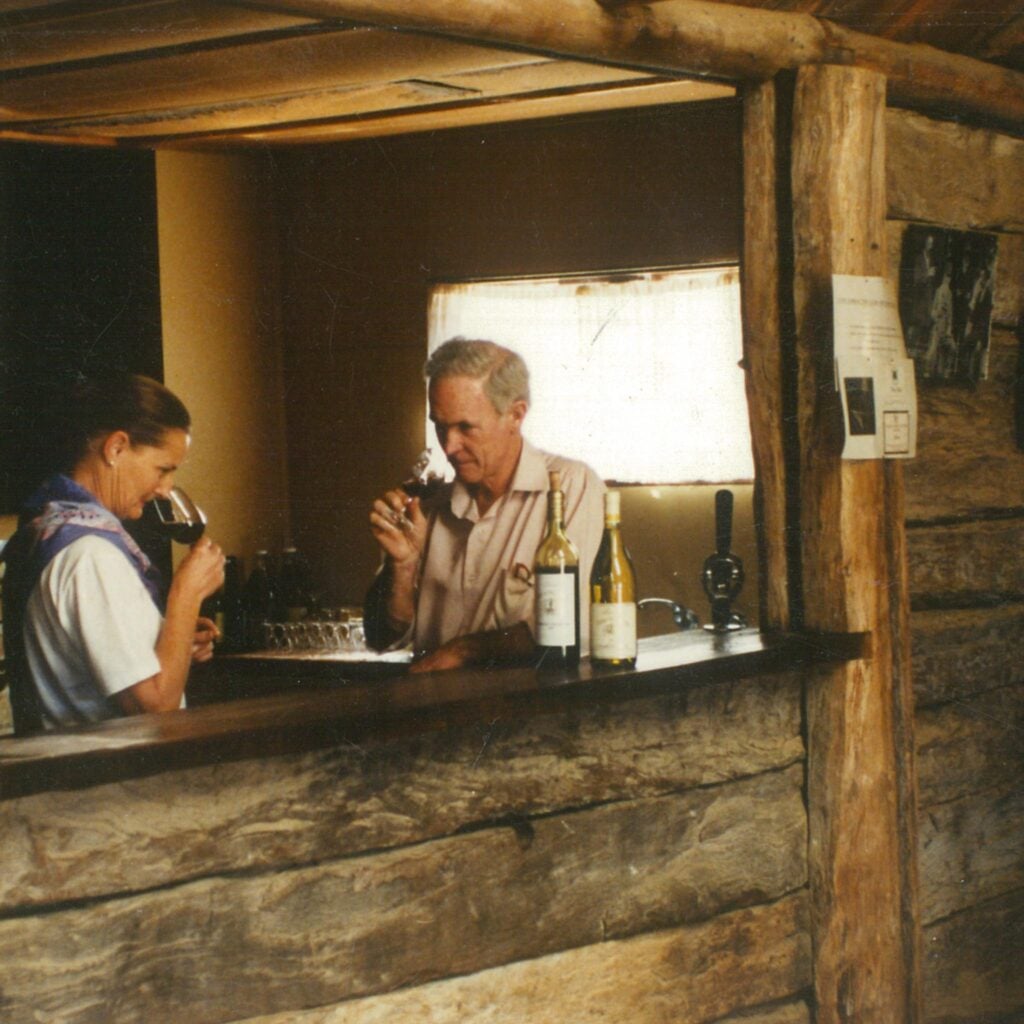
The Evolution of Winemaking
Winemaking in the late 1960s was hard work. Viv took the reins from his father and was winemaker through the early 1970s, managing two properties at once: Great Western and Lake Boga. Rather than chasing trends, the focus was always on producing wines that reflected the place they came from, with Shiraz having a natural home in Great Western and other varieties playing a supporting role.
That philosophy was not always a given. At one stage, Best’s tried its hand at diversifying. “Merlot is going to take off,” some argued at the time. “It’s taking off in America, so it will be the next thing to take off in Australia.” Best’s duly planted Merlot and later ripped it out again when no one wanted it. From then on, rather than chasing public trends, the Thomson philosophy has been to produce wine that reflects the region it comes from.
“After over 160 years we have a pretty good idea of the varietals that grow well in our region. Of course, that does not mean that we don’t experiment or introduce new techniques. We have never yet made the perfect wine, and we will continue in our endeavours to do so.” Viv Thomson
One of the things Viv is most proud of is the inception of the Old Vine Pinot Meunier, a wine first made in 1967 and for which Best’s became renowned. With the 100-year anniversary of Best’s approaching, Viv convinced his father Eric that it was time to make a stand-alone wine from these historic old Pinot Meunier vines, fruit that had previously been used locally for sparkling white or blended away. The rest is history. The Old Vine Pinot Meunier is one of the wines for which Best’s is acclaimed.
The 1967 vintage was a hot one, and there was no refrigeration to speak of. Viv recalls buying a weird and wonderful refrigeration unit that they could not get through the door because it was too tall. With fermentation running hot, he tried to hook into the unit anyway. It proved useless, with no effect whatsoever. Despite the challenges, the wine turned out superb, still remembered as one of the most memorable vintages pulled from the cellar.
Viv had plenty of help along the way from people like Bryce Rankine at the Australian Wine Research Institute, and John Fornachon before him, on hand for advice and to analyse samples. Things were basic at the time. Best’s had no pH meters, so that network was essential to call on for assistance.
In July 1975, Viv appointed Best’s first external winemaker, Trevor Mast. Best’s had grown significantly, as had the Australian wine industry as a whole, and Viv was needed to manage the company and develop relationships further afield. Trevor was the first person at Best’s to hold any formal wine qualifications.
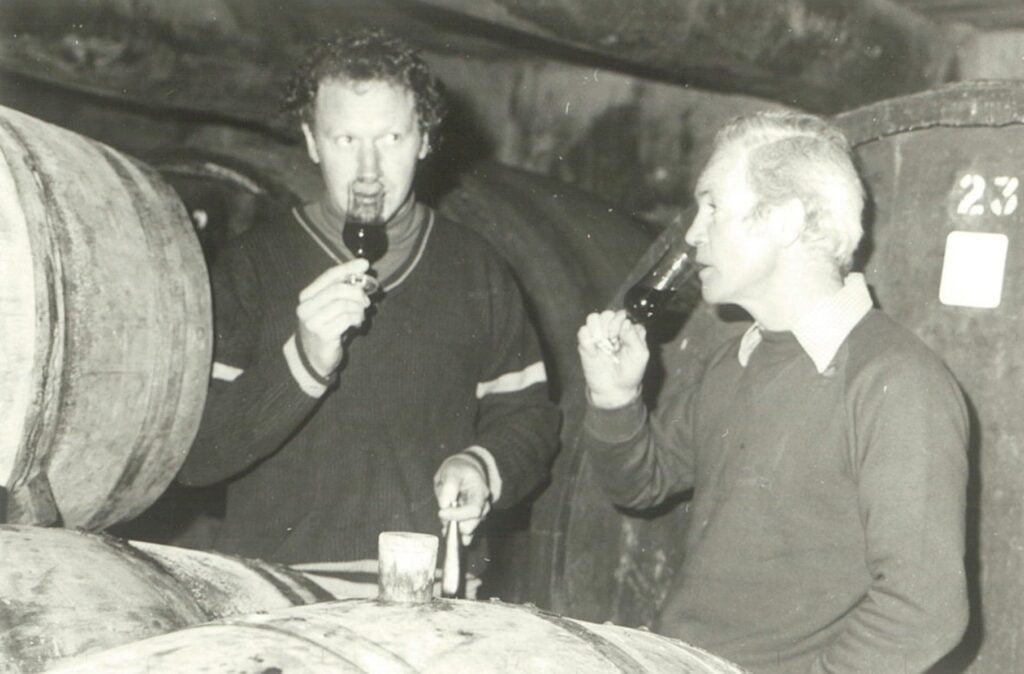
Viv had first met Trevor when he was working at Seppelt and he came and introduced himself to wineries of the region. Viv invited him over to have a look at their humble establishment and told him that if he ever needed a job, to come and see him. A week later, Trevor called in a second time and, quite straightforwardly, said, “I need a job.” That was the start of a wonderful friendship, and Trevor’s enthusiasm was contagious. He brought with him technical skills gained at Geisenheim University in Germany, where he had studied under the renowned Helmut Becker.
The industry was on an upward trend. Shiraz was king, aromatic Rieslings came into fashion and wineries could not keep up with demand for Shiraz. Then consumer tastes shifted toward white wine, and Trevor Mast’s first job as Best’s official winemaker was, fittingly, to make white wine out of Shiraz.
Technology changed dramatically around this time, with the arrival of refrigeration and better filtration. Wine took off across Australia and plantings grew exponentially. Trevor spent 12 years at Best’s before moving on in 1987 to start Mount Langi Ghiran.
More vineyards were planted through the 1970s, including cuttings taken from some of the original blocks. Advances in viticultural assessment also meant learning more about the old vines. Vines once thought to be Pinot Meunier turned out to be Pinot Noir. A viticulturist named Dany Schuster visited and identified Swiss and French clones among them. These were propagated, leading to a large planting of Pinot Noir in 1987.
Riding the Industry’s Ups and Downs
The winemaking names behind the brand kept evolving over time, but the standards never dropped. In 1988, Simon Clayfield was appointed winemaker, followed by other notable names including Michael Unwin (1997–2000) and Hamish Seabrook (2000–2005).
Not every chapter of this era was smooth sailing. The 1980s brought a downturn, with limited export activity, a market reaching saturation point and grape prices dropping, making wine harder to sell. Viv recalls selling a great deal of bulk wine from the cellar door in 20-litre containers.
As the industry pulled through, a string of milestones followed. In 1990, naming conventions for Australian wine were forced to change, with French regional names no longer permitted outside France, and Hermitage became known by its varietal name, Shiraz.
In 1993, the 1992 vintage of the flagship Thomson Family Shiraz was released, commemorating 100 years since the Thomson family had settled in Great Western. Then in 2000, Bin No. 1 Shiraz was introduced for the first time, a more entry-level Shiraz that was set to put the Great Western style firmly in the hands of more wine drinkers.
Marketing the Brand: Chris Thomson
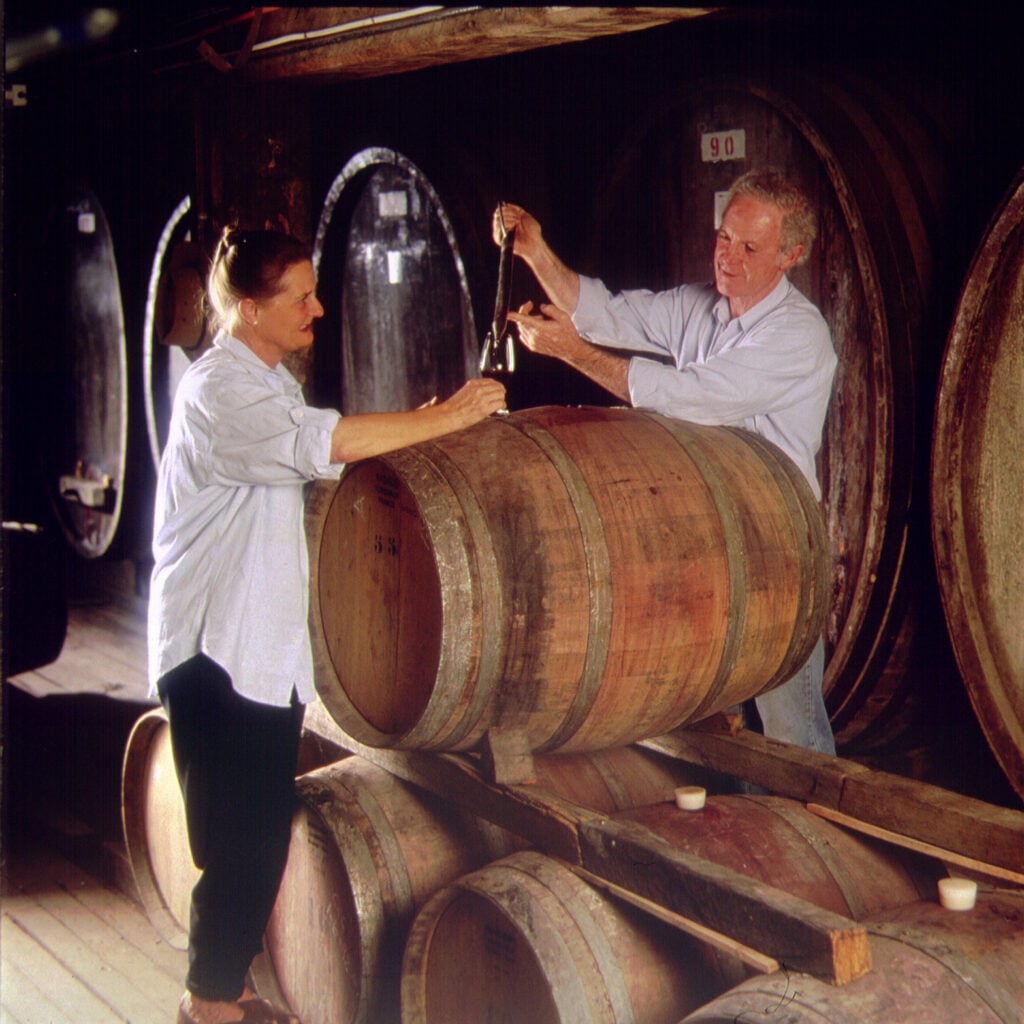
While Viv was busy managing the winery and vineyards, Chris Thomson played a critical role in developing the brand. She was responsible for many of the original label designs and publicity and was always willing to get her hands dirty around the winery too, whether helping on the bottling line, picking grapes or driving the tractor for Viv.
With a creative flair, she designed all of the early labels, letterheads and packaging, a true pioneer of modern-day wine marketing. “There’s good, there’s better and there’s Best’s,” the ad slogans would say. When Viv began travelling overseas in the early 1990s, Chris travelled with him. With quite the palate of her own, she was every bit as knowledgeable about the range.
Viv and Chris travelled the world together, working with international distributors to introduce them to the wines of Great Western. The footprint was small, but the relationships they built were strong. Sweden was the first major market for Australian wine after Chernobyl, though the UK soon became the largest, and Best’s made its initial forays into the UK and Canadian markets.
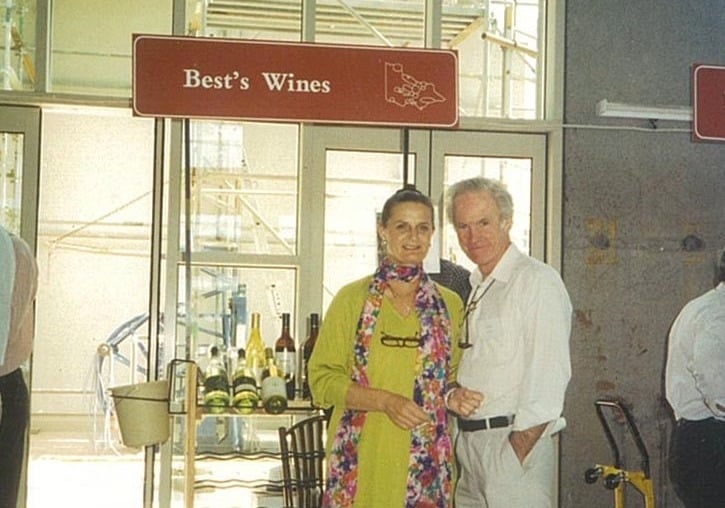
In 1989, Best’s established a connection with Canadian export agent David Osbaldiston. Dave came to Best’s to work vintage and made a lasting impression on the Thomsons, not so much for his help in the cellar as for the fact he spent half his time in the Cellar Door and turned out for the Great Western football team.
Chris single-handedly created many of Best’s international ambassadors. The ultimate hostess, she would welcome visitors into the family home, and they would leave as devoted fans. Once Best’s began exporting, the brand and its wines started attracting attention, and more and more international visitors began to make the trip to Great Western.
Many important relationships have followed since, including introductions made through Asia by Gary Crittenden, and ongoing visits from Tim Wildman MW, who continues to bring international visitors to Best’s and share a broader perspective on the wines.
Chris also played a fundamental role in championing the region. In the early 1990s she joined the Grampians Winemakers Association, and it was Chris who drove the application for Great Western to become a sub-region of the Grampians Geographical Indication. Given the area’s historical and geographical significance, it was a notable achievement, one that secured the Great Western name for winemaking use for years to come.
Viv Thomson: A Leading Australian Wine Show Judge
Viv Thomson is the master of wine tastings and calls it as he sees it. He is highly regarded for his contribution to Australian wine shows over the years, and to this day retains a sharp palate, able to pick a quality wine or a fault in little more than a sniff and a swirl.
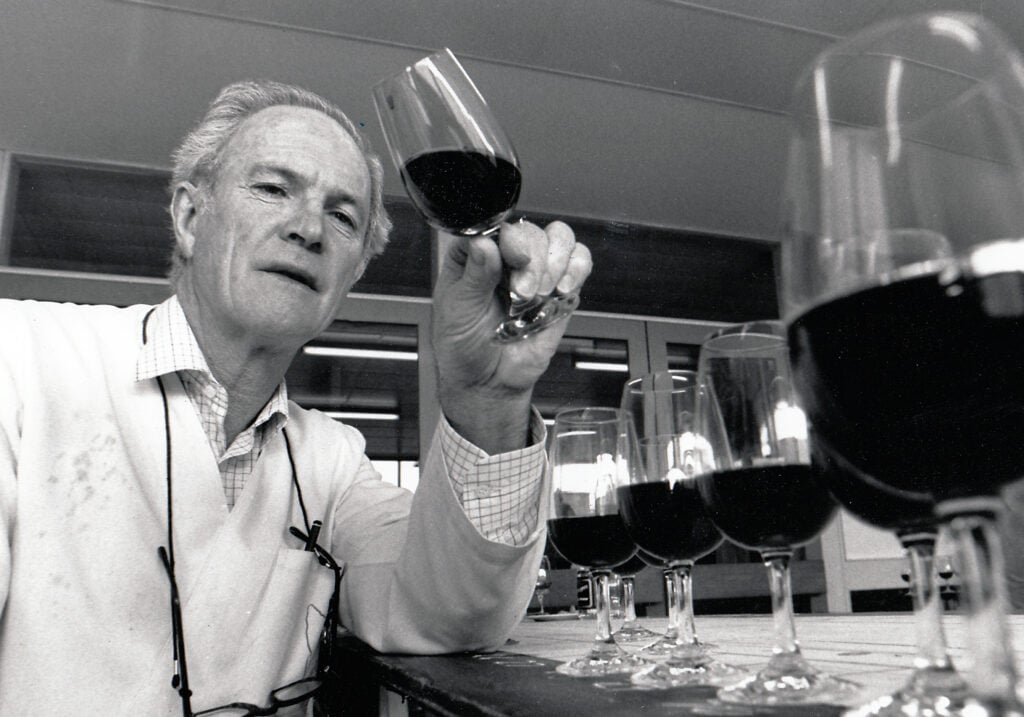
Over more than 20 years, that same sharp palate travelled with him to wine shows in Melbourne, Adelaide, Brisbane, Hobart, Rutherglen, Stanthorpe, Mount Barker and Seymour. He was actively involved with the Melbourne Wine Show Committee and served as President of the Victorian Wine Industry Association for more than seven years, an involvement recognised with a Distinguished Service Award. He is also a former Chairman of the Grampians Winemaking Association.
Viv has been recognised by the Melbourne Food & Wine Festival as a “legend” for his services to the wine industry, and in the 2014 Queen’s Birthday Honours, he was awarded an Order of Australia Medal in the General Division. In 2017, Viv Thomson was announced as the Wine Communicators of Australia Legend of the Vine, Victoria.
After decades at the helm in one form or another, the next handover was already taking shape. Viv and Chris have since stepped back from the day-to-day running of the family business, though they still call the Concongella estate home. Between them, they remain an integral part of what has made Best’s such an enduring part of the Australian wine story.