Fighting Back: Frederick Thomson and the Spirit of Best’s Great Western
Part Two of our 160th Anniversary Series
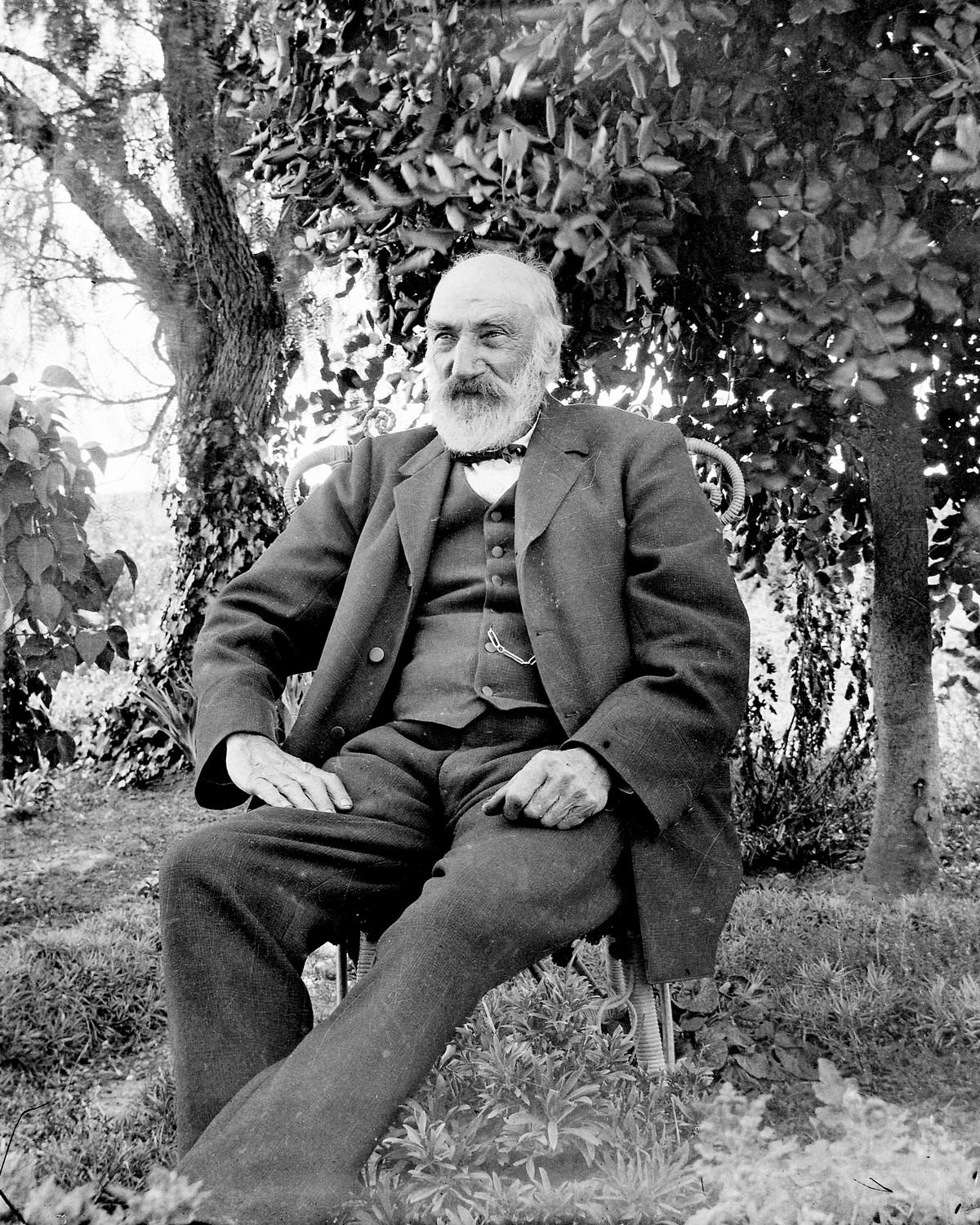
When Frederick Pinchon Thomson purchased Best’s Great Western Wines from Charles Best in 1920, he did so with great optimism and great personal sacrifice. He had sold his shops, his cottages and his family home in Ararat to make it happen. The stakes could not have been higher. What followed was one of the most testing chapters in the history of Best’s, and one of the most remarkable stories of resilience in Australian wine.
As Best’s celebrates a 160-year milestone, we share the story of the period in our history from 1920 to 1969, when the first-generation Frederick and his son, Eric Thomson, took charge.
Great Western: A Name Worth Fighting For
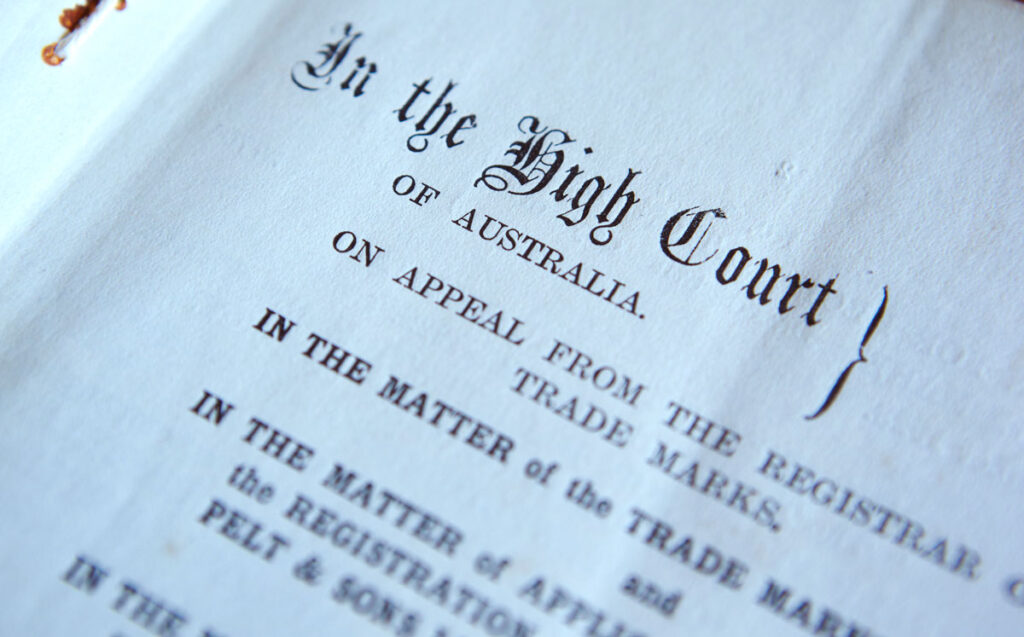
Having just bought the Best’s property from Charles Best, Frederick had barely settled into Concongella before the first battle arrived. What was unanticipated was that the battle came from next door.
On 8 December 1923, B. Seppelt and Sons lodged a trademark application for sole use of the name “Great Western” across all their products. It was a bold move, though perhaps not a surprising one. B. Seppelt and Sons was already one of the largest wine companies in Australia. Benno Seppelt had purchased the Great Western winery from Hans Irvine in 1918, just five years earlier, and under the day-to-day management of his son Oscar, who had been Managing Director since Benno’s retirement in 1916, the company was aggressively expanding its presence in the region.
The significance of that transaction extended well beyond the Seppelt estate. For years, Irvine had been the region’s most important buyer of surplus wine, purchasing from vignerons across the district. In one year alone, Eric later recalled, he bought 150,000 gallons. As Seppelt’s own production grew, those purchases from neighbours would not be maintained. The safety net that Irvine had provided was quietly disappearing. When the registrar approved the application on 30 January 1924, the threat to Frederick’s business was very real. The name “Great Western” was woven into the identity of Best’s. Losing the right to use it would have been devastating.
Frederick did not accept the decision quietly. Together with spirit merchant James Richardson, he challenged the ruling in the Supreme Court of Victoria. They lost. But Frederick was a Thomson through and through and losing a court case was not the same as accepting defeat. He rallied local vignerons and associated businesses and took the fight all the way to the High Court, engaging Owen Dixon QC, later to become Chief Justice of Australia, to lead their case.
After a three-day hearing, the High Court unanimously overturned the decision. Seppelt could not claim sole use of the name Great Western. One Justice, Mr Higgins, noted it would be as absurd as forbidding a grower in Champagne from calling his wine Champagne. The name belonged to the region, not to one producer. Relations between the two neighbours remained cool for years, and Seppelt would later initially oppose a bid by the region’s winemakers to have Great Western registered as an official wine sub-region, a move that, had it succeeded, would have removed Great Western from the Australian wine map entirely. They eventually withdrew their objection.
Frederick had won the name. Now he had to hold onto the business.
Incorporating to Survive
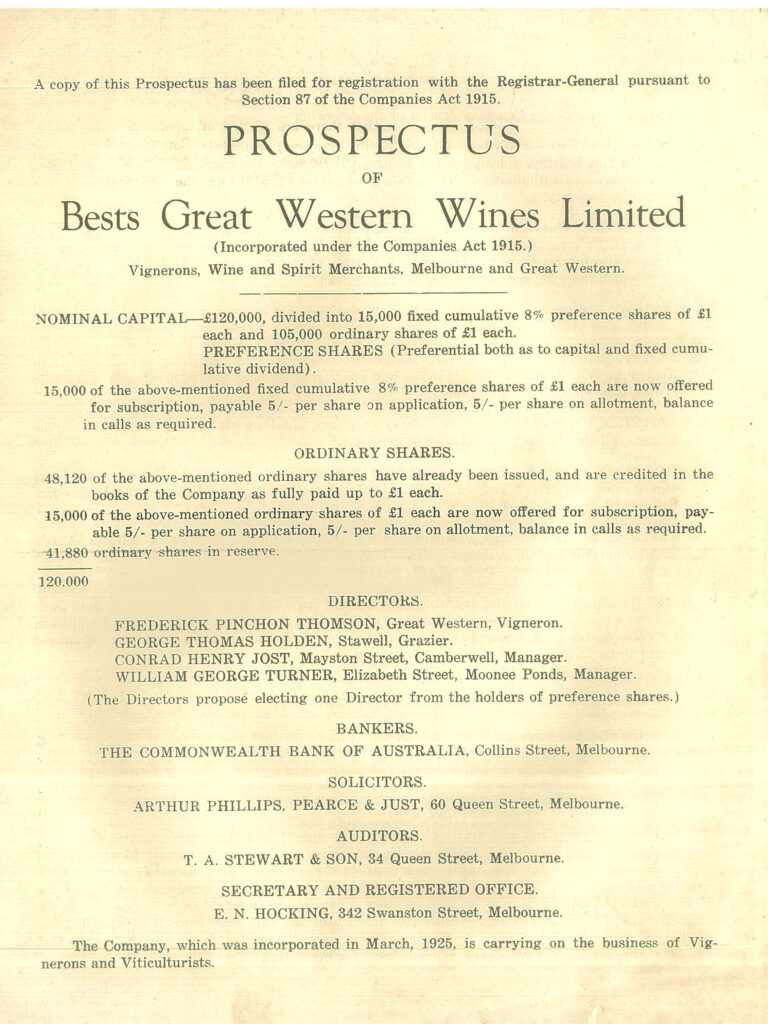
Throughout this period of economic turbulence, Frederick was determined to keep the vineyards open. He recognised that doing so would require a fundamental restructuring of the business. In March 1925, he incorporated the company as Best’s Great Western Wines Limited, with a nominal capital of £120,000 divided into preference and ordinary shares.
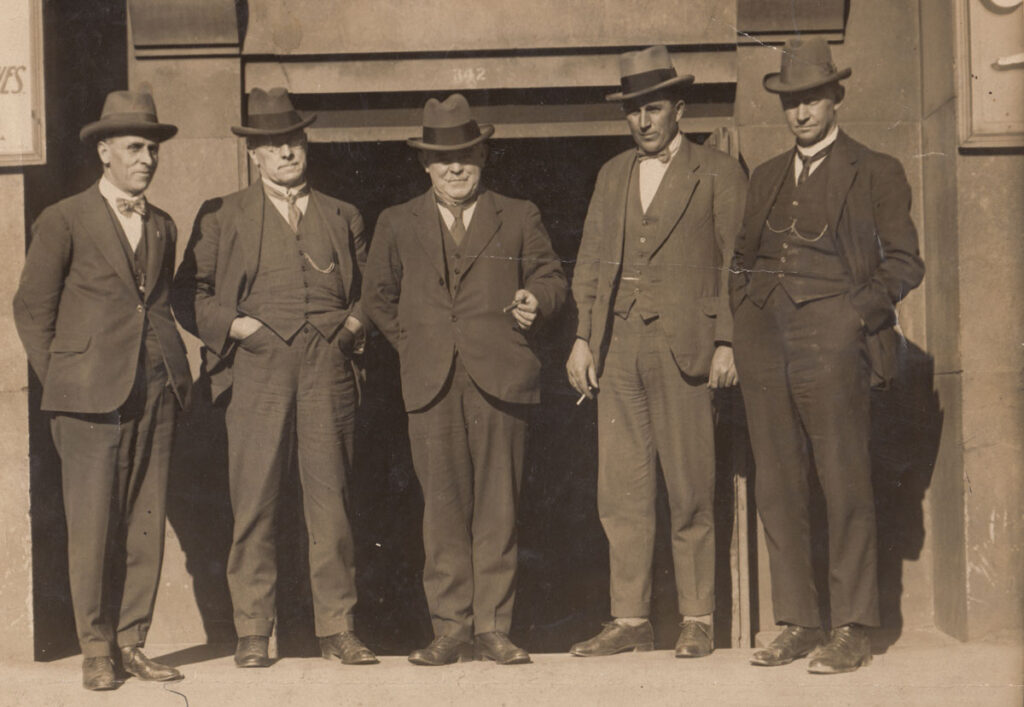
The assets of the new company were considerable on paper: Concongella, St Andrews and Fairview vineyards; two shops and dwellings in Ballarat, both holding an Australian Wine Licence; properties in Minyip and Jeparit; stock of wines, brandy and sparkling wines valued at £41,540; and plant and machinery valued at £9,408. Frederick himself held 29,500 of the allotted shares, with the balance held by directors and associates including George Thomas Holden of Stawell, William George Turner of Moonee Ponds, and Ernest Nicholas Hocking of Elsternwick.
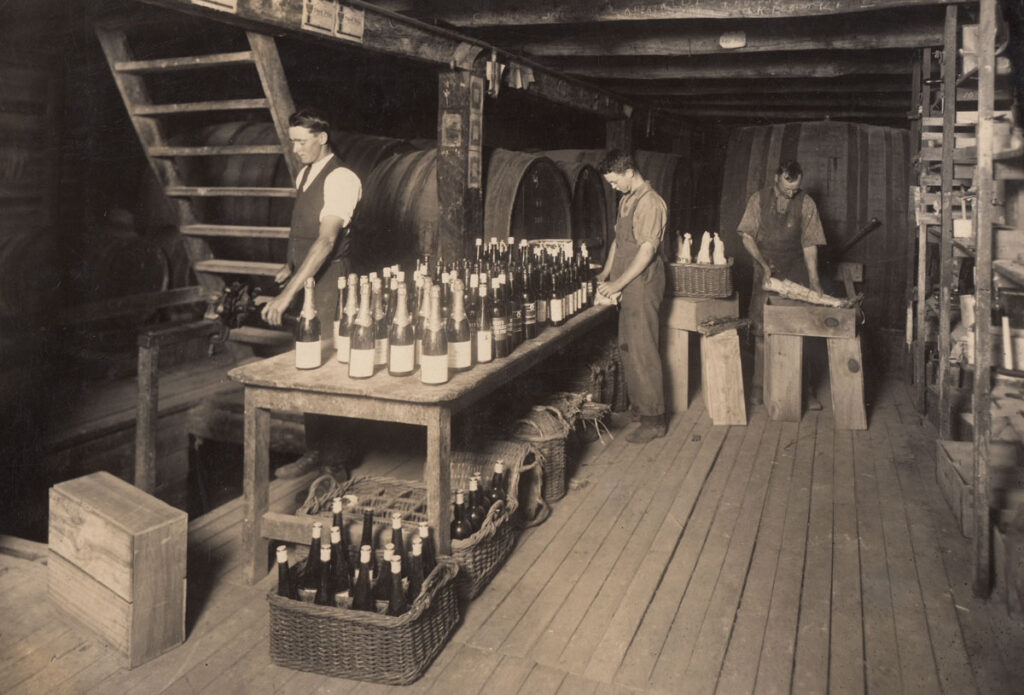
The prospectus made a compelling case to investors. It pointed to the rapid improvements Frederick had made to the property: modern machinery, a distilling plant, new concrete cellars, a bond store and extensive concrete storage accommodation, fermenting tanks and more. Production had increased dramatically, culminating in the making of over 100,000 gallons — principally sweet wines — at the most recent vintage. Fine sparkling wines had been placed on the market and were attracting the attention of connoisseurs. A brandy, pronounced by experts to be of particularly high quality, had been maturing and was ready for market. “Best’s Great Western Wines is an established business,” the prospectus declared. “The pioneering work has been done.”
Sadly, the injection of capital that resulted from incorporation was not enough to turn things around. Frederick’s report to shareholders on the company’s second annual balance sheet, reflecting the year 1927, did not do enough to make a compelling investment case.
The Next Generation: Frederick (Eric) Hamill Thomson was born
While Frederick was fighting for Best’s survival, his family was growing up around the family business. His son, Frederick Hamill Thomson was born in 1908, the second eldest of seven children of Frederick Pinchon Thomson and Emily Grace Thomson, née Hamill. Known to everyone as Eric, his early years followed the family’s expanding fortunes across the region.
Eric began his schooling at Rhymney Reef State School while the family lived at the St Andrews vineyard, before moving to Ararat when his father expanded the business to include a retail wine and chaff operation in town. Frederick would ride a Triumph motorcycle back and forth to the vineyard to attend to wine and vine matters. The family later spent time in Hawthorn, where Frederick Snr ran a Best’s Wines cellar and retail outlet, with wine transported in casks from the vineyard to the Melbourne cellars for bottling. Eric completed his schooling at Ararat State School and Stawell High School before the family moved to the Concongella vineyard at Great Western in the mid-1920s.
On leaving school, Eric worked alongside his father at Great Western. He had harboured a dream of peanut farming, but the family business drew him in. It was a decision that, as things would soon unfold, would matter enormously.
When the Bank Came Knocking
The legal victory to retain the use of the name Great Western was sweet, but it could not insulate Best’s from the forces gathering around the world. The years that followed were punishing. Drought hit in 1928. Around this time, Frederick sold St Andrews and Fairview, shedding properties that had been part of the business for years. The English market, the most important export market for Best’s at the time, grew more and more depressed. The federal government’s decision to reduce the export bounty on wine, a lifeline for many producers, only made things harder.
By 1929, with the western world plummeting into economic depression, the Commonwealth Bank had had enough. Receivers were called in. Frederick found himself out of work, without a property. He captured the mood with characteristic bluntness in a couplet he composed around that time:
‘29 not so fine, 1930 very dirty.
Best’s was not alone in its struggle. As Eric would later reflect, the combination of Seppelt’s growing self-sufficiency, the Depression and the sheer difficulty of viticulture saw the last of most of the smaller vineyards in the Grampians wine region disappear. The economics were stark: the costs and labour required to operate a vineyard were high, a great deal of manual work was needed, and wool was simply easier to grow. Constant labour was not necessary. One by one, the small vignerons of Rhymney and Moyston were forced out, squeezed by the pressures of marketing and big business. In time, only one vineyard would remain in those areas. But the story did not end there.
Starting Again at Lake Boga
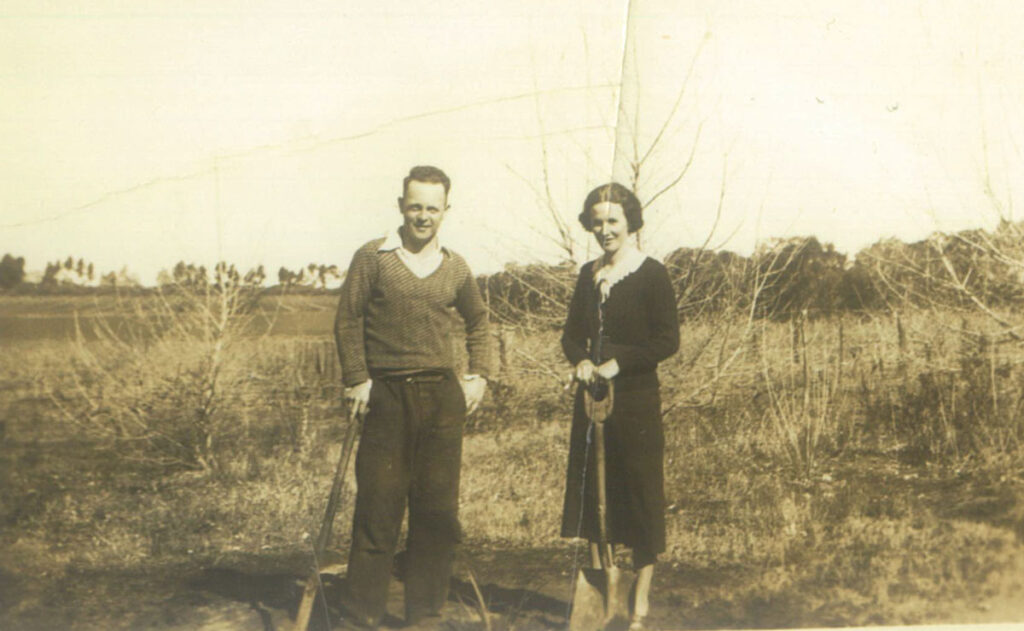
Stripped of Best’s Concongella but not of his determination, Frederick turned his attention north. In 1930, together with his son Eric, he purchased a block of land at Lake Boga, some 240 kilometres north of Great Western, close to the Murray River.
‘Some twelve acres on the Kerang Road, covered with saltbush and carrying a dilapidated house which was just habitable. The water supply came from a fluming, an open conduit from the Tresco pump.’
Equipment was equally basic. The first vintage at Lake Boga was crushed with the energetic use of a pickaxe handle. The family worked with what they had.
In a moment of dark humour, Frederick named it Misery Farm, after a popular film of the time. The terms of the purchase reflected the times: the property cost £140, with a deposit of just £10. Legally, it was held in Eric’s name. As Eric explained:
‘The agreement was put in my name, although I had no worldly possessions, and was guaranteed by my father, who had no tangible assets.’
Within months, however, father and son spotted a better block nearby. This second property could be had for £600, with a £20 deposit and payments of £50 per year at six per cent interest. Unable to service both at once, they sold Misery Farm and moved on. They named their new home St Andrews, in honour of the vineyard Frederick had been forced to sell some years earlier. Thomson family legend has it that Frederick also hocked some of the children’s insurance policies to help fund the purchase.
A Stroke of Fortune: Concongella, Great Western is Returned
While Frederick and Eric were planting and tending vines at Lake Boga, something unexpected was happening back in Great Western.
Less than a year after the receivers had been called in to sell Best’s Great Western Wines Limited, they were having no luck whatsoever. No buyer could be found, and with the bank unwilling to stay in the business of making and selling wine, there was only one practical solution. Frederick was offered the chance to buy the property back, and in 1931, he did. After just two years away, Concongella in Great Western returned to the hands of the Thomson family.
The relief and excitement must have been profound. Eric’s brother Bill, who had been living in Melbourne, was about to join the family business as well. The Thomsons were back.
The Thomson Brothers Share Property Management
With the family now managing both Lake Boga and Great Western, the two brothers divided responsibilities. Eric took the helm at Lake Boga, Bill managed Concongella. Their father Frederick, now based in Melbourne, made regular trips by train to check in and offer guidance. Eric had married Mary Eleanor Martin in 1937, born in Glenorchy and working as a nurse at Stawell Hospital. He and Mary made their home at Lake Boga during these years.
In 1944, the brothers swapped home bases. Eric, his wife Mary and their young son Viv, moved to Concongella. Bill and his wife Jessie, with daughter Barbara, moved to Lake Boga. Life at Concongella in those years was far from comfortable. There was no power and no water, and in January 1946 the vineyard was struck by flood. As Viv would later recall:
‘We had no power here, no water. I remember when we first got power — I think it was in 1947 and it initially came from Ararat — but it was pretty low-voltage sort of stuff. The roads were all dirt roads in those days, of course. The train used to stop here and we used to load barrels of wine, hogsheads and quarter casks onto the train. They were quite small but they were heavy. I used to take them down in a horse and cart, and unloading them was pretty tricky.’
Frederick continued to make the trip from Melbourne to check in, but his health was fading. In 1949 he took a sea voyage through Asia aboard SS Taiping when he developed a severe gall bladder infection. He was transported to Kowloon in Hong Kong, where he died in hospital on 12 October. He had given everything to Best’s: his savings, his ingenuity, his stubborn refusal to accept defeat. He had fought in court to protect the name, bought the property back from receivers, built a new life from scratch at Lake Boga and found his way home to Concongella. The business he left behind was, against all odds, intact. Eric was enormously proud of what his father had built and rebuilt against such difficult odds. Now it was his to carry forward.
Eric Thomson: The Quiet Innovator with a Sparkling Vision
Eric Thomson was a quietly determined man. He had watched the Great Depression nearly cost the family everything, and that experience shaped the way he approached the business, always looking for opportunity, never afraid to try something new.
One such moment of observation led to something lasting. When visitors came to the vineyard on warm days and were offered a glass of wine, Eric noticed they would often add a splash of soda water or lemonade. Seeing an opportunity in that simple habit, he took a cask of dry red wine to a soft drink maker in Callawadda, a small town not far from Stawell, and together they bottled a light, aerated wine he called Claretta. It proved popular. Best’s Great Western Claretta was born in 1939.
From there, the range grew: Golden Vintage, Pink Cham, Special Reserve Sparkling Burgundy and the famous Baby Bubblies, all carbonated, affordable and widely loved right through to the 1960s. The idea that wine didn’t need to be expensive just because it sparkled was simple but powerful.
This inventive sparkling range, alongside the Hocks and Clarets being produced at the time, kept Best’s firmly on the radar of wine lovers across Australia. And while wine tourism may seem unremarkable today, in the late 1950s it was virtually unheard of, yet Best’s was already drawing visitors to the cellar.
More Than a Winemaker, A Community Man at Heart
But to understand Eric Thomson fully, you have to look beyond the winery. For a quiet, determined man, his footprint in the Great Western community was extraordinary and sustained over decades.
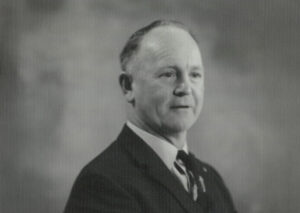
He was a member of the Victorian Wine and Brandy Producers Association, attending monthly meetings and serving on several sub-committees. But it was in the town itself that his contribution ran deepest. Life Governor of the Stawell Hospital Committee. Shire Councillor and President. Rotary member for twenty years, serving as President and Chairman of Community Service. Freemason for just on 55 years. Secretary of the Great Western Anglican Church for 37 years. Life Member of both the Race Club and the Football Club. Honorary Life Member of the Fire Brigade. He gave the same quiet commitment to the Progress Association, Parks and Gardens, and the Mechanics Institute — the last for more years than anyone could remember.
His wife Mary walked alongside him in much of it. She taught Sunday School in 1949, and again from 1952 to 1966, and together they remained involved with the church into their eighties.
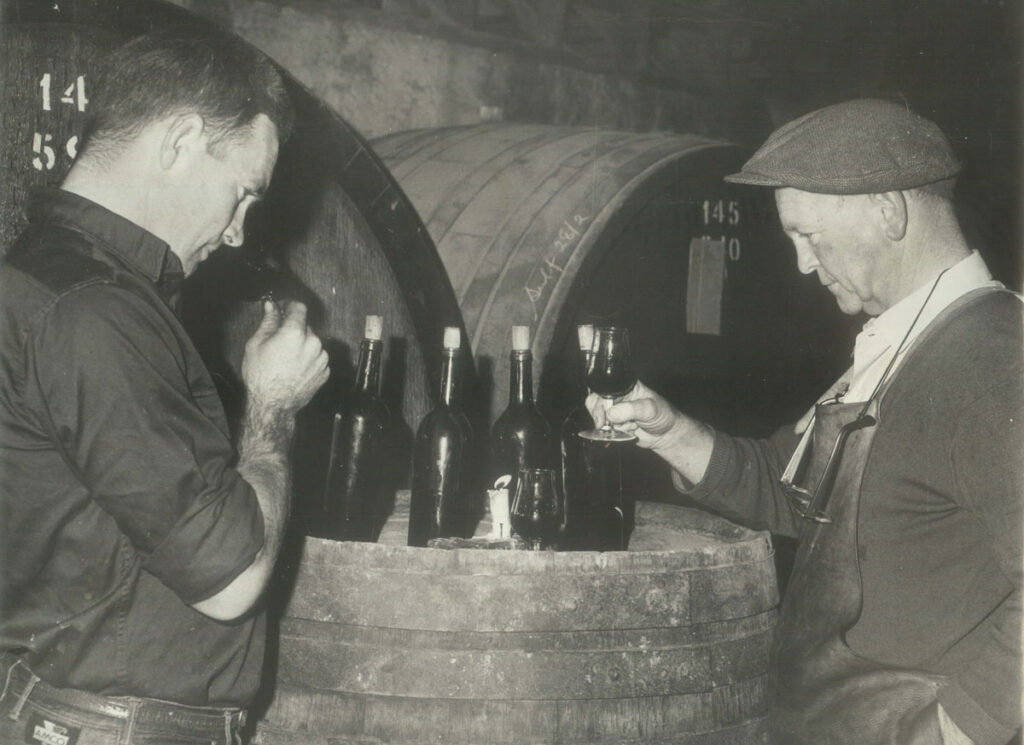
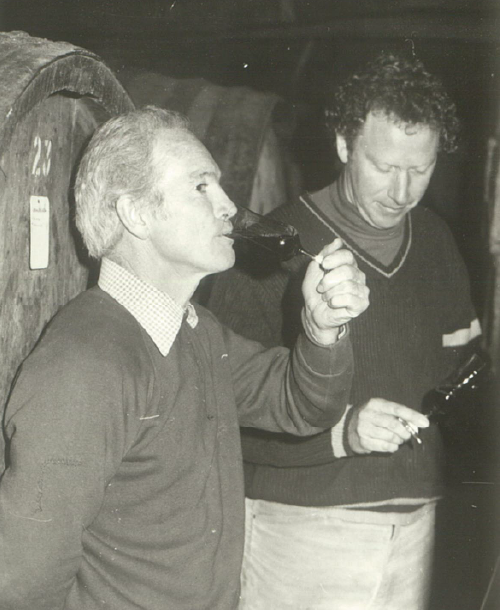
Eric was also a passionate sportsman. Tennis and Australian rules football were his great loves. As Viv Thomson later recalled with some amusement, the training oil of choice at three-quarter time was Best’s Sweet Sherry, liberally applied with, apparently, amazing results. The Great Western Football Club’s oval carries his name today — the Eric Thomson Reserve. It is a fitting tribute to a man who gave so much to so many, quietly, and without seeking recognition. Eric and Mary lived at the Concongella vineyard until 1972, when they moved into the township of Great Western, remaining there until Eric’s health deteriorated.
The Next Chapter
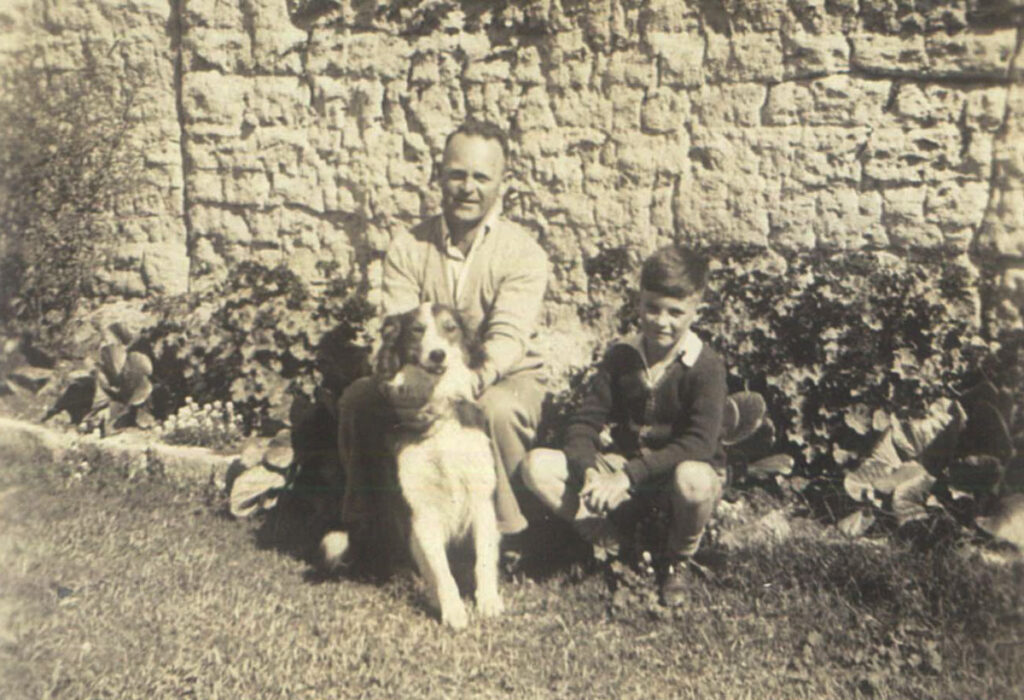
Eric Vivian Hamill Thomson, known as Viv, was born in Swan Hill in 1938 and his sister Elizabeth in 1947. Viv moved to Great Western, along with his family, as a six year old in 1944 and continued to be schooled locally. By 1961 he had travelled abroad and was ready to come home. Working alongside his father was not always easy, as Viv himself would later reflect:
‘Working with my father was difficult. It is often difficult for fathers and sons to work together but the timing around my increased involvement posed extra problems. I entered the world of wine in 1961, at a stage when the industry was very buoyant and almost glamorous. My father had laboured long and hard just to keep the business afloat for at least the previous thirty years. It’s to his credit that he was able to balance both our aspirations to a successful conclusion.’
The handover was gradual and unannounced. ‘As my father released the reins, I took up the slack,’ Viv said simply. Quietly, a new chapter had begun.