Rooted in the Vineyard: Ben Thomson and the Future of Best’s Great Western
Part Four of our 160th Anniversary Series
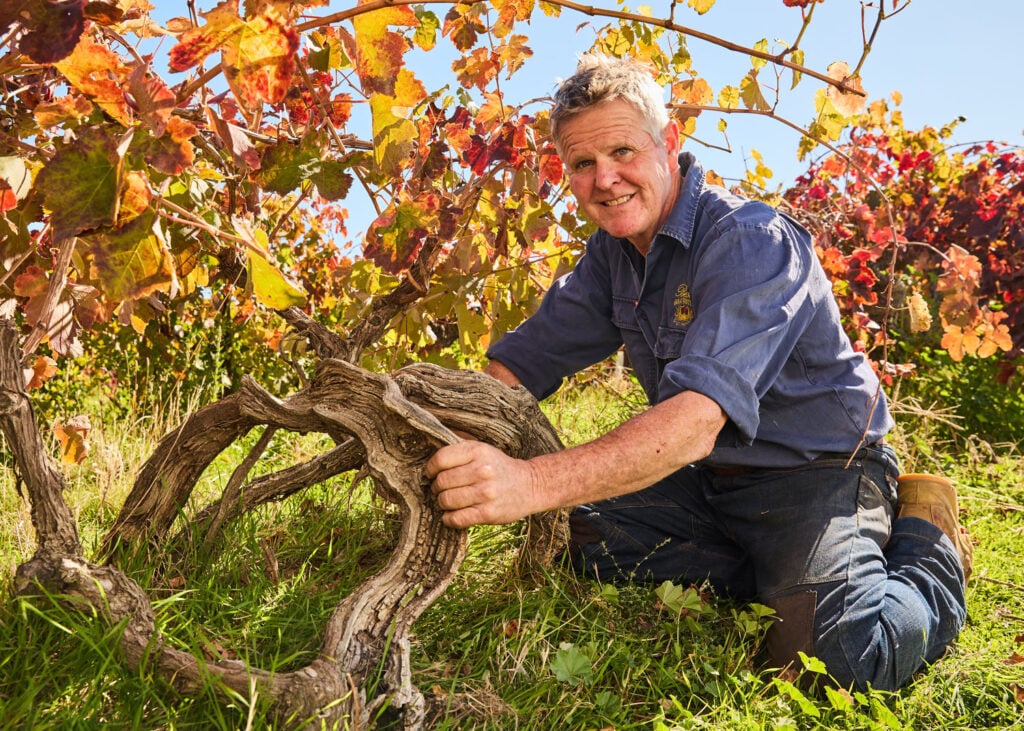
If you’re looking for Ben Thomson, the vineyard is the best place to start. For more than four decades, he has tended the vines at Best’s Great Western with real passion, always thinking hard about what comes next. In this final chapter of our 160th Anniversary Series, we look to the future, and at the contribution fifth-generation Ben has made to the family business.
Growing Up at Concongella
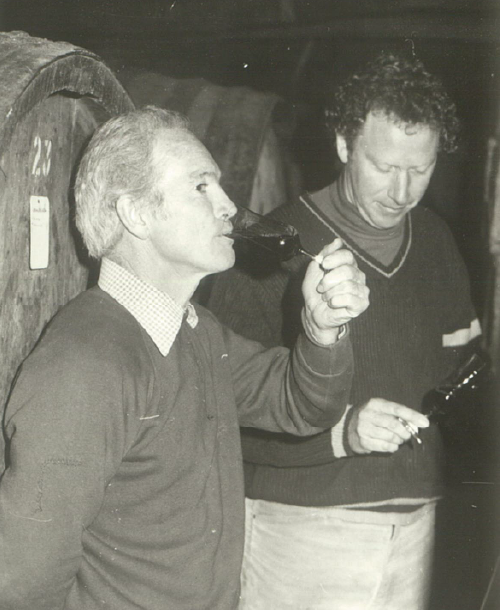
Ben was born in 1964, the eldest of Viv and Chris’s four children. For the Thomson kids, the vineyard surrounding the winery was the backyard. Growing up at Concongella, in the small community of Great Western, meant lending a hand wherever it was needed, from the vines to the cellar door. (Readers of our last chapter will remember this occasionally included rearranging the chalk markings on the old stable beams as they were being moved to become the cellar door.)
The practical one of the family, Ben has a knack for cutting to the heart of a problem and finding a practical fix. Following in his father’s footsteps, he grew up on tractors and built a passion for sustainable viticulture. Always making decisions with one eye on the continuity of the family business.
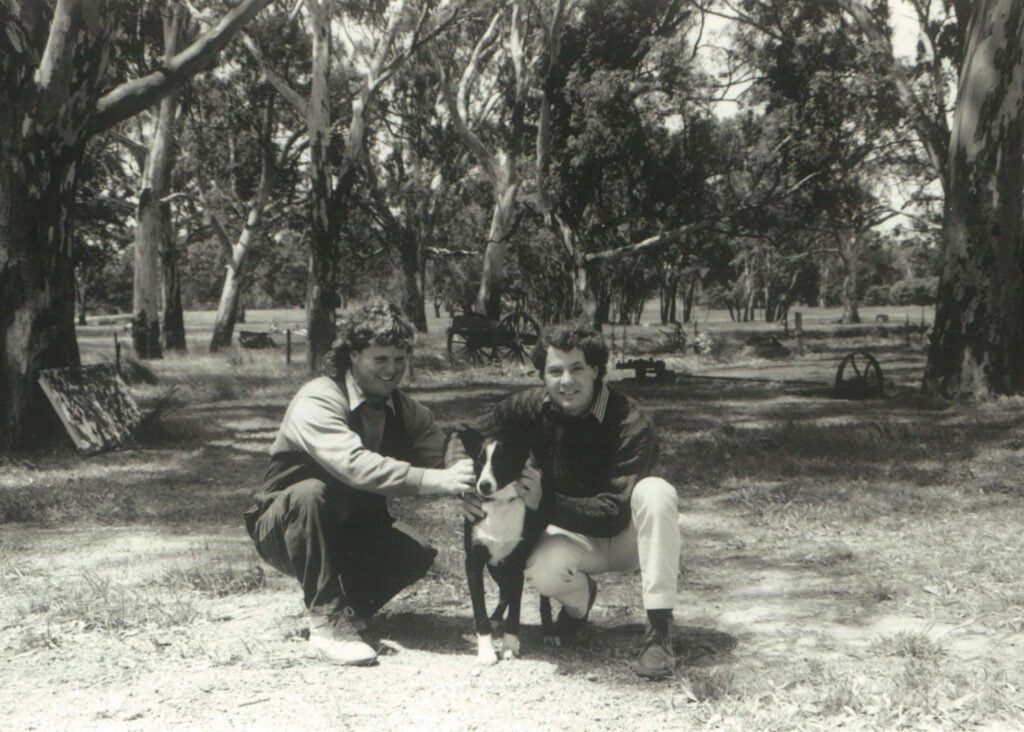
Ben has always had a close affinity with the land and a fascination with machinery. And when it comes to machinery, the bigger the better. After a short stint driving bulldozers for a local contractor, he made an annual pilgrimage to Western Australia. Ben helped with the cropping each season at the wheel of the biggest and best tractors John Deere could produce. Cropping for 2-3 months of the year over nine years and always returning back to Great Western.
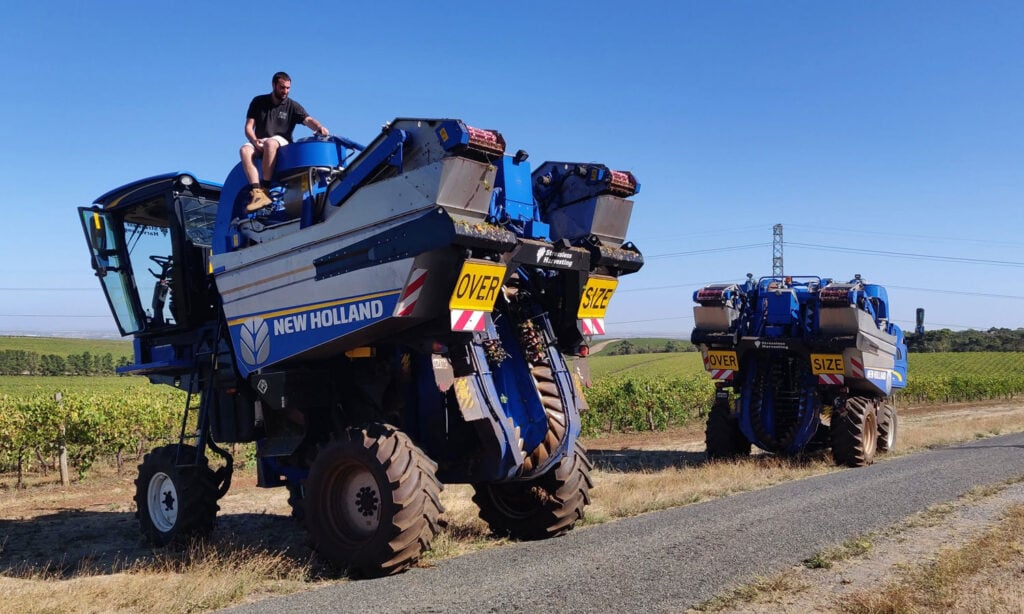
From huge tractors to grape harvesters was a natural step. After a brief apprenticeship driving a harvester for Seppelt Great Western, we bought one of our own, and in 1992 Ben travelled to California to instruct others about machine harvesting and vintage techniques.
Like most things on the land, harvesters seem to multiply. From one small Gregoire harvester, we now have nine large Braud harvesters, which Ben operates as Stressless Harvesting, helping many other vineyards. It may be ‘stressless’ for others, but the name tends to lose its meaning once vintage is upon us. Stressless now contract harvests across the Bendigo, Pyrenees, Henty and Grampians regions and in Adelaide.
The Industry Continues to Mature
Looking back, Ben is struck by just how much the wine sector has changed since his father and grandfather were at the helm, from advances in technology to the way vineyards are managed. Gone are the days of sixty or so wineries across Victoria. Today it’s a sophisticated industry, still at the mercy of the agricultural gods, and survival means thinking ahead and making sure Best’s stays relevant to modern wine drinkers.
Our old vines, still among the oldest pre-phylloxera vines in the world, give us a real point of difference, and our philosophy hasn’t changed either: we know what we do well, we stay true to our region and we don’t chase trends. That doesn’t mean standing still. New wines are needed, and new skills keep coming into play, so building a team with diverse skills and perspectives makes for a greater whole. And no wine is more meaningful to us than the Thomson Family Shiraz.
1993: The First Thomson Family Shiraz
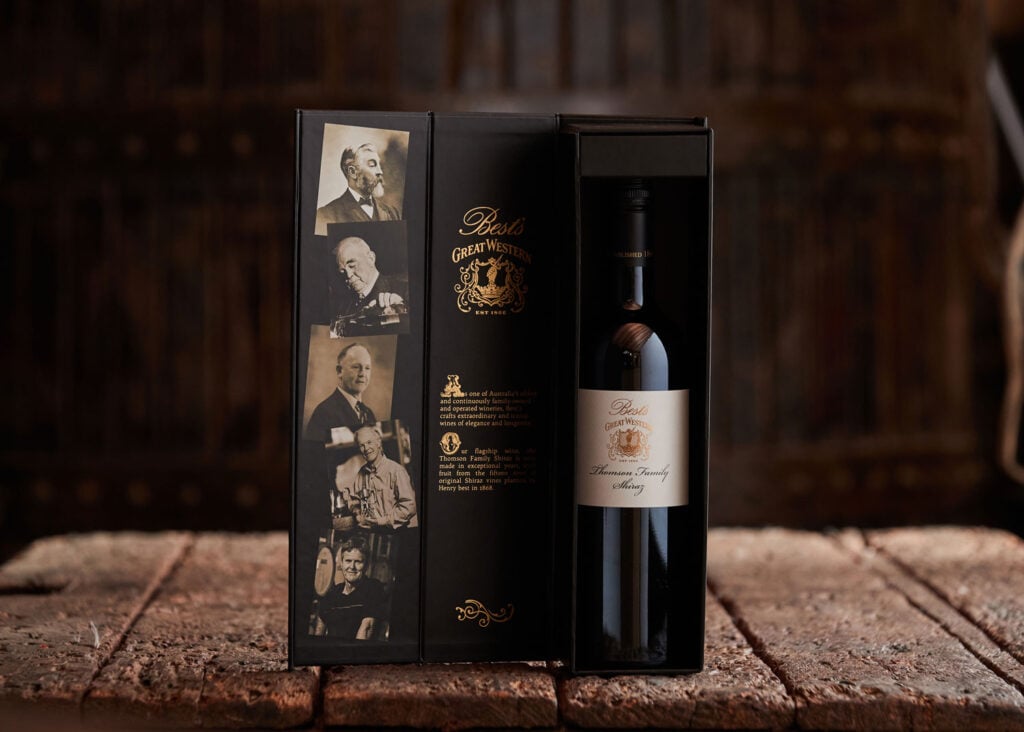
In 1993, the first Thomson Family Shiraz was released from the 1992 vintage, commemorating 100 years since the Thomson family settled in Rhymney, Great Western. This special single-vineyard wine is made from the 15 rows of original 1868 Shiraz vines planted by Henry Best, once referred to as ‘Hermitage’ in Henry’s daily journal. Today it’s made only in the very best vintages, and it holds First Classified status in the Langton’s VIII Classification, ranking among Australia’s finest and most collected wines. It’s a wine we’re enormously proud of, bearing the family name and standing among the finest Shiraz in Australia.
Over the years, we’ve released wines that truly reflect the place where the grapes are grown. Bin No. 1 Shiraz, introduced in 2000 as a more accessible entry point, put the Great Western style firmly in the hands of everyday wine drinkers. For many, it’s still the wine that puts Best’s on the map.
Sparkling Shiraz, a regional hero of Great Western, has a story of its own. In 2006, after a 20-year absence, it made a triumphant return to the Best’s portfolio and quickly became one of our most sought-after wines.
Taking Charge of the Vineyards
With three vineyards in his care, St Andrews at Lake Boga, Salvation Hills and Concongella at Great Western, Ben has had plenty of viticultural moving parts to juggle.
Until the 1970s, apart from our remarkable 1860s plantings, Best’s vineyards held what could best be described as the basic Australian varieties, Shiraz and Riesling, all rod pruned. Since then, we’ve expanded into Chardonnay, Cabernet Sauvignon, Merlot, Pinot Noir, among others. Thirty years is a short span in viticulture, and there’s still much to learn about these newer varieties.
Like winemaking, viticulture never stands still. Ben sees this as a chance to balance new technology with good old-fashioned grape-growing know-how. Hand practices such as leaf and bunch plucking and hand picking will always have a place beside newer mechanical methods, and trellising remains the subject of many a debate.
Our expansion at Rhymney, the replanting and upgrading at St Andrews, Lake Boga, and the day-to-day running of St Andrews, Concongella and Salvation Hills were all handed over to Ben as his responsibility.
Like his father, Ben had no formal training. But Ben being Ben, he’s packed in a lifetime of hands-on experience and earned his QBE: Qualified By Experience. His drive to accept nothing but the best led him to consult all manner of viticulturists and take part in many regional projects.
2008: A New Generation at the Helm
In 2008, Viv handed the business to Ben and stepped into semi-retirement. Best’s Great Western had entered its fifth generation. A talented team came together, bringing real rigour to the way business decisions were made. A Commercial Manager and a Sales Manager came on board, and the team set about focusing on what Best’s does best: distinctive regional wines.
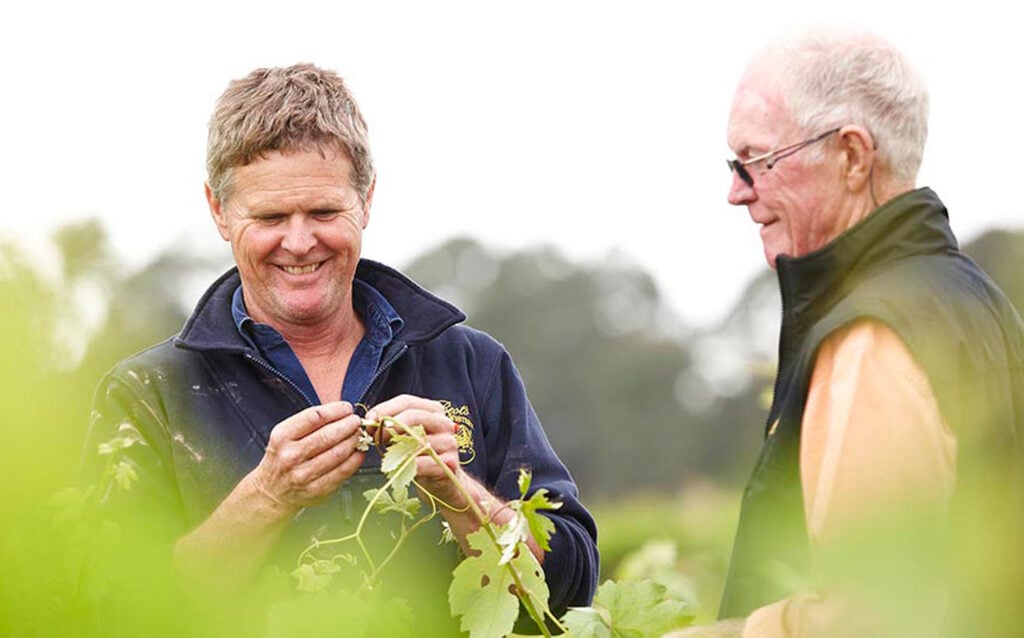
We’ve been fortunate to work with an incredible roll call of winemakers, each making their mark, moving the business forward and lifting the quality of the wines. In 2005, a promising young winemaker named Adam Wadewitz joined the team (2005–2011), followed by Justin Purser (2011–2022). Both worked closely with Ben to understand the vineyards, sharpening our focus on Shiraz and Riesling and amplified wines like the Old Vine Pinot Meunier that continued its cult status. Today, Jacob Parton carries that work forward as our winemaker.
In 2012, during a time of transition in the winery, the brand stepped right into the spotlight when the 2011 Bin No. 1 Shiraz won the Jimmy Watson Memorial Trophy for the best young red wine at the 2012 Royal Melbourne Wine Show. Accolades may come and go, but this one was particularly special. Hamish Thomson recalls it as one of the only times his father called him to share news with tears in his eyes.
More recognition followed:
- 2017: Thomson Family Shiraz, Halliday Wine of the Year
- 2020: Halliday Best Value Winery of the Year
- 2023: 2021 Foudre Ferment Riesling, Halliday Wine of the Year
- 2024: Two of our finest wines included in the eighth edition of the Langton’s Classification, with Thomson Family Shiraz named First Classified and Bin No. 0 Shiraz named Classified
- 2025: Canberra International Riesling Challenge trophies wins for the 2025 Great Western Riesling
- 2026: The 2025 Best’s Foudre Ferment Riesling, wins the 2027 Halliday Riesling of the Year, the second time the wine has won the award, alongside maintaining our 5 red star winery rating
Awards are wonderful, but they’re not what drives the Thomson family. Humble by nature, what matters most to them is hearing that people are enjoying the wines and liking what we do.
A Turning Point: The 2017 Frost
Just as the focus was paying off and the wines were thriving, along came the devastating black frost of November 2017. Despite frost fans in the vineyard, a sudden burst of cold air settled over our Concongella vineyard and wiped out a large share of the fruit. The 2018 harvest was decimated. Very few wines could be made from that vintage, and it took years to recover.
It was a turning point. To help spread the risk of frost in future years, Ben made the call to acquire the Sugarloaf Creek Vineyard in Great Western, the most significant vineyard purchase in the company’s history. With 114 hectares under vine, predominantly Shiraz along with some Cabernet and a small parcel of Merlot, it also secured fruit for our Bin No. 1 Shiraz and Great Western Cabernet for years to come. Fittingly, it sits just two kilometres from where William Thomson bought the St Andrews orchard and vineyard at Rhymney in 1893.
A Family Affair
Family has always been at the heart of Best’s, and it still is. Ben’s brother Hamish returned to the family business in 2016, and Marcus, who runs his own photography business, captures our official photos. Viv and Chris are never far away, still living on the property they’ve called home for more than half a century.
Then there’s Nicole Thomson. Nicole started working at the Best’s Great Western Cellar Door in 2011 and loved the job from day one. These days she’s literally married to it, having tied the knot with Ben in November 2019. Nicole is now our DTC Admin and Wine Club Manager, looking after all our club members and making sure every one of them enjoys a personalised service.
Joining Australia’s First Families of Wine
Being a fifth-generation business is a source of real pride for the Thomsons, and so is the company they keep. In 2009, several of Australia’s oldest family-owned, multi-generational wine businesses came together to form Australia’s First Families of Wine. A unique collaboration of like-minded families, its aim was to change the narrative about the history, provenance and quality of Australian premium wine by telling the stories of the families themselves, the golden thread that connects them. In May 2024, Best’s proudly joined the family.
‘As a fifth-generation family business, we value the unique perspective that a family business offers and look forward to further opportunities to share our stories. The families involved represent wineries with similar values and a shared understanding of the landscape and opportunities, which makes us stronger as a collective group. For several decades, we’ve been friends and colleagues, and now the time is right for us to join and stand alongside fellow vintners who have such respect for their craft.’ Ben Thomson
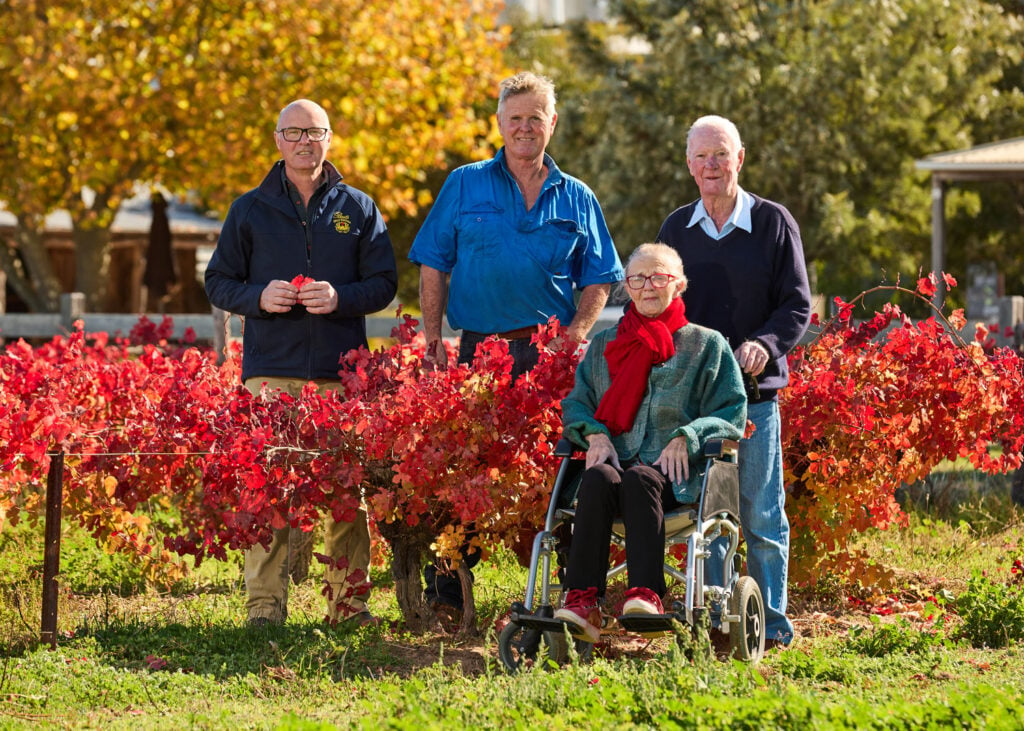
Ben Thomson: Making His Own Mark
There are always big footsteps to follow when you walk the path of family, and as the fifth generation, setting your own course is up to you. For Ben, it’s in the vineyard that he’s made his mark.
His viticultural contribution has been consistently recognised. In 2021, Best’s won the inaugural Old Vineyard of the Year in the 2021 Young Gun of Wine Vineyard of the Year Awards, and Ben was shortlisted for the 2027 Halliday Viticulturist of the Year.
When the 2025 Foudre Ferment Riesling was named the 2027 Halliday Riesling of the Year, Halliday’s Jeni Port pointed to the hand behind it: ‘Ben Thomson is a constant feature out in the vineyard and has been for more than 40 years.’ She was quick to add that this doesn’t mean he’s removed from the winemaking. Far from it. Ben and Nicole were there together to accept the award on behalf of the Great Western team, and for Ben, the win carried extra weight:
‘I’m particularly chuffed to win this accolade twice. The first one was good, but to win this is amazing. It helps the region and Great Western. It’s a particularly special accolade in our 160th anniversary year.’ Ben Thomson
His vineyard philosophy is one of minimal intervention. Ben believes a little vine stress concentrates grape flavour, and at Concongella this happens naturally. Patience plays its part too: Ben prefers a slower ripening, so the flavours develop alongside the sugar.
Looking to the Future
There’s no denying that making wine is challenging, and the future is never far from Ben’s mind. Best’s has 150 hectares under vine, all located throughout the Great Western region, and our vineyards are among our richest resources. We source fruit from several distinctive sites: Concongella, the grand matriarch and our headquarters, which surrounds the winery and is home to the Nursery Block and the old Thomson Family Shiraz vines; Salvation Hills, 13 kilometres away at Rhymney; and our newest estate, Sugarloaf Creek, purchased in 2019. Each produces distinctly different grape characteristics, from vines less than five years old to almost 160.
The advantage of Sugarloaf Creek Vineyard is the combination of four different soil types ranging through sand, slate, clay and gravel and North/ South and East/ West facing vine rows which make these blocks an ideal site for blending from with nuances across white and black pepper characteristics, among others.
New Wines from Exceptional Fruit
Innovation in the winery has meant making the most of what the vineyard gives us. When a downturn in Shiraz sales left us with exceptional fruit and no buyer for it, the team chose not to drop it from the vines. Instead, they created new white and sparkling wines to show it off:
- Blanc de Noir: a white sparkling wine made from 100 per cent Shiraz. Part of the vine canopy is removed to let the sun work its magic, and the grapes are handpicked early in the ripening period, well before we would pick for a red, to keep the higher natural acidity a sparkling wine needs. They’re then pressed gently to draw out the juice without any colour from the skins, and the wine is made into a cuvée. The new 2024 Blanc de Noir builds on the learnings from our first vintage.
- Syrah Blanc: a white wine made from 100 per cent Shiraz from our Sugarloaf Creek vineyard in Great Western. The parcels were carefully selected for quality and flavour from the vineyard’s higher-altitude blocks, which help maintain good acid drive, and the vines were leaf plucked so the sun could build flavour in the fruit. Meticulous winemaking from start to finish kept colour extraction to a minimum, producing a wine of real quality and drive.
Caring for the Land
Under Ben’s guidance, the team has worked hard towards Best’s Wines becoming a Certified Winery Member of Sustainable Winegrowing Australia. That commitment shows up right across the business:
- Water: on-site dams capture natural rainwater, reducing our reliance on mains and groundwater supply
- Energy: more than 900 solar panels are installed across our Concongella and Sugarloaf Creek vineyards, and a newly installed battery storage system now powers up to 90 per cent of our winery
- Waste and recycling: soft plastic recycling for all pallet wraps; branded cartons reused across vintages or repurposed as cardboard packaging for shipping; all bottles and plastics recycled; and all packaging made from recycled materials
- Land and soil: more than 6,000 plants across a range of species have been planted along the creek lines at Sugarloaf Creek to help prevent soil erosion, and we’re working to bring wild grasses into our vineyard management to help retain soil moisture naturally, reducing the need for soil stripping and mulching
You can read more about our sustainability journey on our website.
Embracing New Technology
Ben’s openness and curiosity, and his willingness to test new technology and say plainly what works and what doesn’t, keep prompting conversations about how things can be done better. In 2024, Best’s became the first Australian winery to commercially trial an autonomous UV-C light system for controlling powdery mildew. Partnering with Wine Australia and Agri Automation on the UVEX and Burro UV-C light trial from 2024 to 2026 has let Ben test early-stage technology that reduces chemical use in the vineyard, saving time and money while moving towards a cleaner future.
With an eye on the long-term health of Best’s vineyards and the wider industry, Ben’s focus for the coming season is on groundbreaking technology:
- Developing an autonomous, electric under-vine whipper snipper
- Trialling a sap flow sensor trial that measures water uptake in vine sap, a radically different and more specific approach than soil moisture monitoring
- Kicking off drone trials with Pacific Fertiliser in selected vineyard blocks, using data from our GPS mapping to improve efficiency, terrain access and accuracy
- Continuation of the Smart Apply system with Lidar spraying

Sharing What We Learn
Ben’s contribution doesn’t stop at the Best’s boundary fence. He’s generous with what he learns, speaking at industry events and, together with the vineyard team, taking part in Wine Australia field days to showcase our vineyard practices and the autonomous vehicle trials we’ve been running. In 2025, the UV-C trial also featured at Wine Victoria field days and at the Australian Wine Industry Technical Conference. We take part in AWRI smoke trials and help with some of its genomic testing, and the winery is an active member of the Grampians Winemaking Association, with a Best’s Wines representative sitting on the committee. Whether a trial succeeds or not, Ben is always happy to share what he’s learned, and the whole region is better for it.
Your Chapter in the Story: 160 Years Poured In
One hundred and sixty years after Henry Best cleared his first gums beside Concongella Creek, the vines he planted are still in the hands of a family that knows them well, and in Ben’s, they’re looking firmly to the future.
Over four chapters, we’ve shared the story of two families, five generations and 160 years at Concongella. But the story of Best’s has never belonged to the Thomson family and the Best’s team alone. It’s been poured into glasses at weddings, reunions, cellar door visits and quiet nights at home for generations. If Best’s has been part of your story, we’d love to hear it. Share it with us through 160 Years Poured In, or in person at the cellar door, and help us write the next chapter.